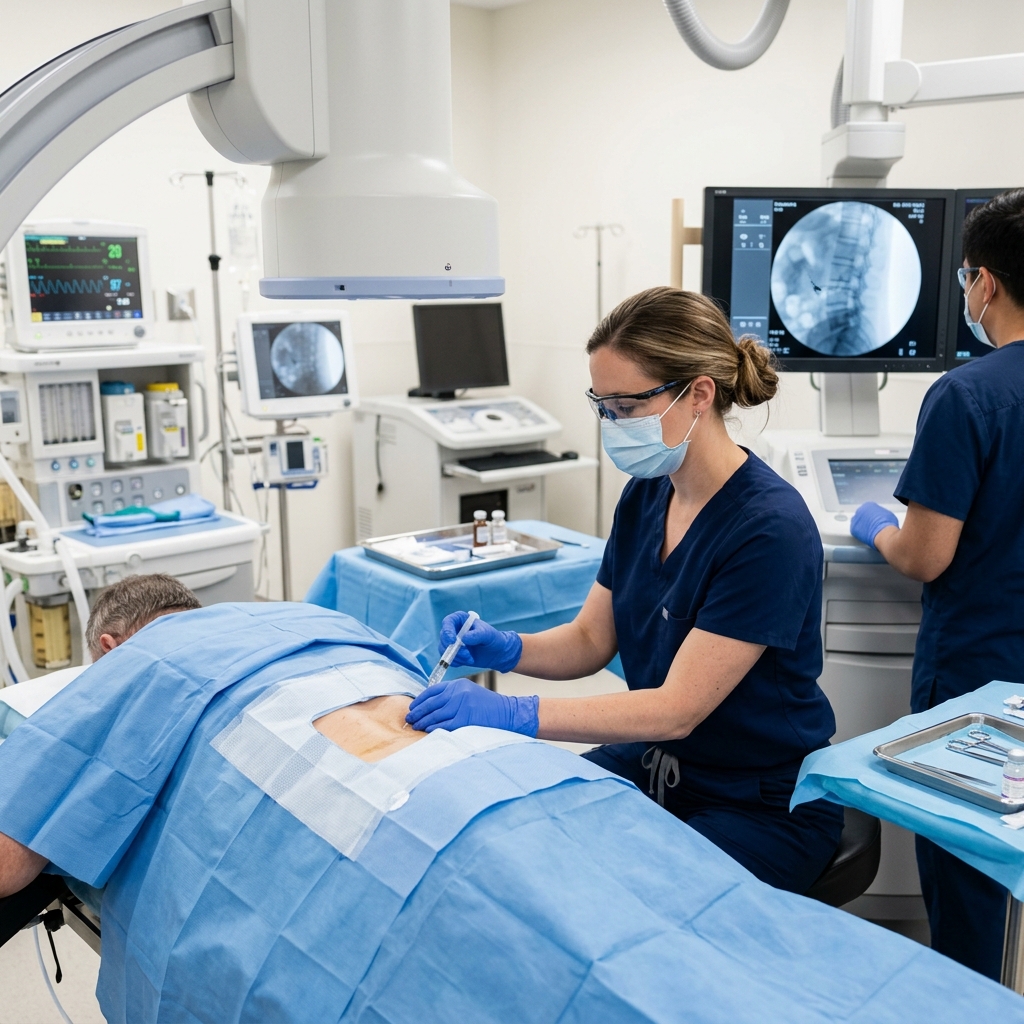
Interventional Neuromodulation in Indore
Spinal Cord Stimulation & Advanced Therapy for Chronic & Failed Back Surgery Pain
Interventional neuromodulation uses precisely placed electrical devices — most commonly a spinal cord stimulator (SCS) — to interrupt chronic pain signals before they reach the brain. It is one of the most effective options for pain that persists despite medication or even after spine surgery (failed back surgery syndrome). Dr. Sparsh Jaiswal is fellowship-trained in interventional neuromodulation (FINM) and offers this therapy at Apollo Hospitals, Indore — including a unique trial phase that lets patients experience the relief before committing to a permanent implant.
Key Facts
- check_circleSpinal cord stimulation (SCS) can reduce chronic back and leg pain by 50–70% in responders.
- check_circleA reversible, non-destructive therapy — nothing is cut or permanently removed, and the device can be switched off or taken out.
- check_circleA trial phase lets you experience the pain relief for several days before deciding on a permanent implant.
- check_circleIdeal for failed back surgery syndrome (FBSS), CRPS, and chronic neuropathic pain that has not responded to other treatments.
- check_circleOften reduces or eliminates the need for long-term opioid pain medication.
When Pain Persists — Why Neuromodulation?
For some patients, pain continues despite surgery, injections, and medication — a frustrating and disabling situation known as failed back surgery syndrome or chronic neuropathic pain. Neuromodulation offers a different approach: instead of operating on the spine again, it modulates the pain signals themselves. Because Dr. Sparsh Jaiswal holds a dedicated fellowship in interventional neuromodulation (FINM) — a qualification very few surgeons in Central India hold — patients can access this advanced therapy locally, with a trial-first approach that removes the guesswork.
Reversible & Non-Destructive
Unlike repeat spine surgery, neuromodulation does not cut or remove tissue. The device can be adjusted, switched off, or removed entirely — a uniquely low-commitment therapy for chronic pain.
Trial Before You Commit
A temporary trial stimulator lets you experience the pain relief for several days in daily life. Only if it works do you proceed to a permanent implant — so you know the benefit before committing.
Reduces Opioid Dependence
By controlling pain at its source, neuromodulation often allows patients to significantly reduce or stop long-term pain medication — avoiding the side effects of chronic opioid use.
Targets Pain Medicine Can't Reach
For neuropathic pain, failed back surgery syndrome, and CRPS that do not respond to tablets or injections, neuromodulation directly interrupts the faulty pain signalling.
Personalised & Adjustable
Modern stimulators are programmed to your specific pain pattern and can be fine-tuned over time — adapting as your needs change, without further surgery.
Restores Function & Sleep
By reducing constant pain, neuromodulation helps patients return to work, activity, and restful sleep — improving overall quality of life, not just pain scores.
Considering Spinal Cord Stimulation?
Dr. Sparsh Jaiswal will review your case personally and tell you whether this is the right option for you. Book a consultation or message on WhatsApp — same-day responses.
Neuromodulation vs. Repeat Surgery or Long-Term Medication
| starNeuromodulation | Repeat Surgery / Chronic Medication | |
|---|---|---|
| Reversibility | Fully reversible — device removable | Surgery is permanent; long-term drug side effects |
| Try before committing | Yes — trial phase | No trial possible |
| Tissue damage | Minimal — percutaneous leads | Repeat surgery adds scarring |
| Opioid use | Often reduced or stopped | Frequently increases over time |
| Adjustability | Re-programmable without surgery | Fixed once performed |
| Best for | Neuropathic & post-surgical pain | Clear structural problems |
Who Benefits from Neuromodulation?
check_circleSuitable For
- Failed back surgery syndrome (persistent pain after spine surgery)
- Chronic neuropathic back and leg pain not responding to medication
- Complex Regional Pain Syndrome (CRPS)
- Persistent radiculopathy / sciatica unsuitable for further surgery
- Diabetic peripheral neuropathy with severe pain
- Patients seeking to reduce long-term opioid use
infoMay Not Be Suitable When
- Pain with a correctable structural cause better treated by surgery first
- Active untreated infection
- Certain bleeding disorders or inability to undergo a trial
- Unmanaged psychological factors (addressed before implantation)
How It Works — Step by Step
Assessment & Selection
A detailed pain evaluation, imaging review, and discussion of your history confirm whether neuromodulation is appropriate — and rule out causes better treated another way.
Trial Stimulation
Thin temporary leads are placed percutaneously near the spinal cord. You wear an external stimulator for several days and assess the relief in your real daily life — a low-risk test of effectiveness.
Evaluate the Trial
If the trial meaningfully reduces your pain (typically 50% or more), you are a strong candidate for a permanent system. If not, the leads are simply removed — no permanent commitment.
Permanent Implant
A small pulse generator (like a pacemaker for pain) is implanted under the skin and connected to the leads — a minimally invasive day-case or short-stay procedure.
Programming & Follow-Up
The device is programmed to your pain pattern and fine-tuned over follow-up visits. You can adjust the stimulation yourself within set limits as your needs change.
Related Conditions & Procedures
Frequently Asked Questions
What is neuromodulation and how does it work?
Neuromodulation uses a small implanted device to deliver gentle electrical pulses to the spinal cord or nerves, interrupting pain signals before they reach the brain. The most common form is spinal cord stimulation (SCS). Rather than treating the structural problem, it changes how the nervous system processes pain — which is why it works for chronic and neuropathic pain that medication and surgery cannot relieve.
What is a spinal cord stimulator (SCS)?
A spinal cord stimulator is a small device — similar to a pacemaker — implanted under the skin and connected to thin leads placed near the spinal cord. It delivers mild electrical pulses that reduce the sensation of pain. It is implanted in a minimally invasive procedure and can be programmed and adjusted to your specific pain pattern.
Can neuromodulation help pain that continues after spine surgery?
Yes. Persistent pain after spine surgery — called failed back surgery syndrome (FBSS) — is one of the most established and successful uses of spinal cord stimulation. When further surgery is unlikely to help, neuromodulation can significantly reduce back and leg pain by modulating the pain signals directly, often restoring function and reducing medication.
Is the neuromodulation device permanent? Can it be removed?
It is one of the few pain therapies that is fully reversible. Before any permanent implant, you undergo a trial phase to confirm it works. Even a permanent system can be switched off, re-programmed, or completely removed at any time if needed — nothing in the spine is cut or permanently altered.
What is the trial phase and why does it matter?
The trial phase is a unique advantage of neuromodulation. Temporary leads are placed and you wear an external stimulator for several days, testing the relief during normal daily activities. Only if the trial meaningfully reduces your pain (usually by 50% or more) do you proceed to a permanent implant. This "try before you commit" step removes the guesswork and greatly improves outcomes.
Which conditions can neuromodulation treat?
Neuromodulation is used for failed back surgery syndrome, chronic neuropathic back and leg pain, complex regional pain syndrome (CRPS), persistent sciatica/radiculopathy not suitable for further surgery, and painful diabetic peripheral neuropathy. It is also valuable for patients wanting to reduce long-term opioid use.
Will neuromodulation reduce my need for painkillers?
For many patients, yes. By controlling pain at the level of the nervous system, neuromodulation often allows a significant reduction — and sometimes complete cessation — of long-term pain medication, including opioids. Reducing opioid dependence is one of the key goals and benefits of the therapy.
Where can I get neuromodulation treatment in Indore?
Dr. Sparsh Jaiswal is fellowship-trained in interventional neuromodulation (FINM) — a qualification very few surgeons in Central India hold — and provides spinal cord stimulation and related therapies at Apollo Hospitals, Vijay Nagar, Indore. Call +91 8450888766 to book a consultation and find out if you are a candidate.
verified_userMedically reviewed: May 2026 — Dr. Sparsh Jaiswal, MBBS DNB FISS FINM MNAMS · Consultant Spine Surgeon, Apollo Hospitals, Indore (Reg: MP-16286 | MCI-19-30548)
Speak with Dr. Sparsh Jaiswal
Book a consultation to find out whether this approach is right for you. Same-day emergency assessments available for spine trauma.