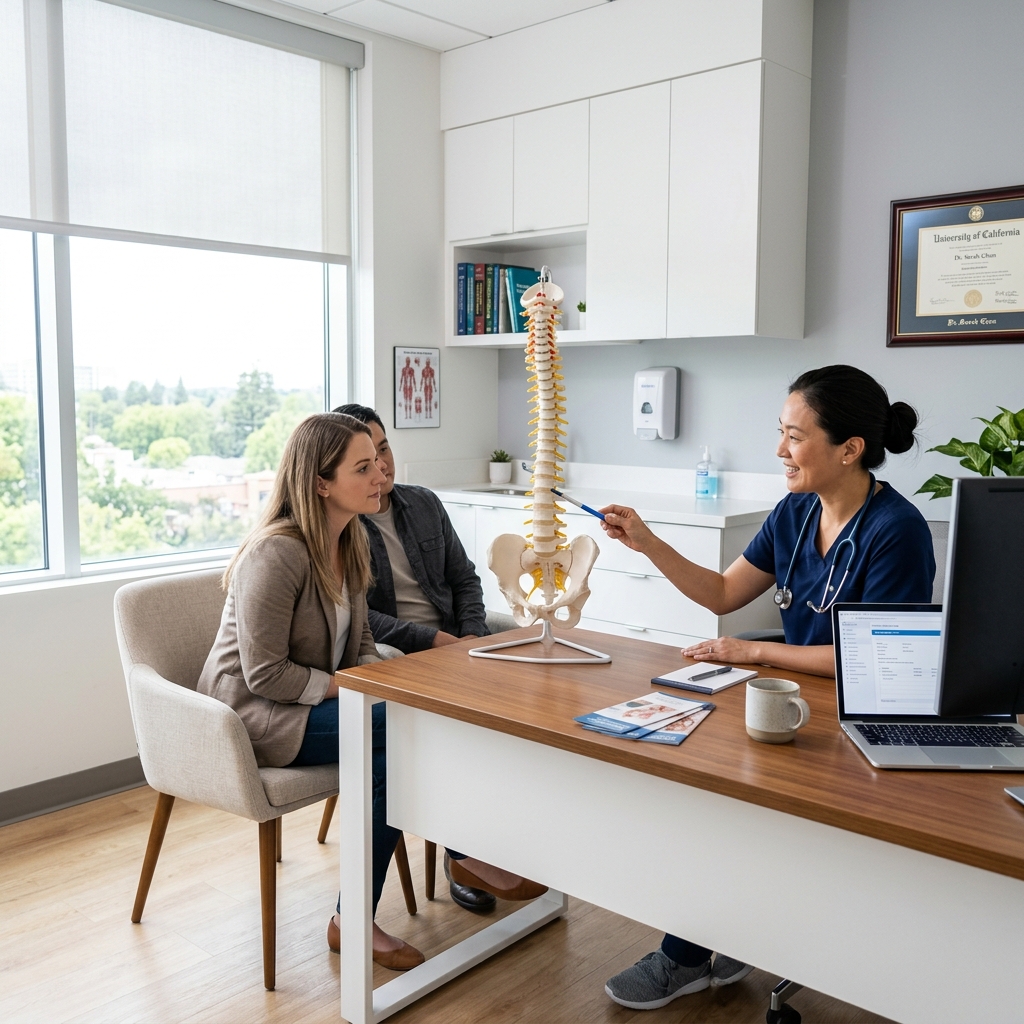
Spinal Condition
Neck Pain Treatment
Cervical Pain & Cervicogenic Disorders
Neck pain is a leading cause of disability worldwide, often originating from degenerative disc disease, poor posture, or acute trauma to the cervical spine.
Understanding Neck Pain
The cervical spine — comprising 7 vertebrae — is remarkably flexible but highly vulnerable to injury and degeneration. Neck pain may arise from the discs, joints, muscles, nerves, or vertebrae themselves. When left untreated, cervical conditions can progress to radiculopathy (nerve compression causing arm pain) or myelopathy (spinal cord compression causing weakness and gait instability). Dr. Sparsh Jaiswal provides both non-surgical and surgical interventions depending on the severity and cause.
infoCommon Causes
- Cervical disc degeneration (cervical spondylosis)
- Herniated cervical disc compressing nerve roots
- Whiplash from road traffic accidents
- Poor posture — prolonged forward head position ("tech neck")
- Muscle strain from overuse or tension
- Cervical stenosis — narrowing of the cervical canal
- Rheumatoid arthritis affecting cervical joints
symptomsKey Symptoms
- check_circlePain and stiffness in the neck, shoulder, and upper back
- check_circleHeadaches originating from the base of the skull
- check_circleTingling or numbness radiating into the arms and hands
- check_circleWeakness in the arms or loss of fine motor control
- check_circleDifficulty turning the head or looking over the shoulder
- check_circleBalance and gait problems (in severe myelopathy)
Diagnosis
Evaluation includes cervical spine X-rays, MRI to assess disc and nerve status, and flexion-extension X-rays to detect instability. EMG/NCS helps quantify nerve damage, and myelography may be used for complex cases.
verified_userMedically reviewed: May 2026 — Dr. Sparsh Jaiswal, MBBS DNB FISS FINM MNAMS · Apollo Hospitals, Indore (Reg: MP-16286 | MCI-19-30548)
Frequently Asked Questions about Neck Pain
What causes neck pain in younger adults?
In younger adults, the most common cause is sustained forward head posture from prolonged screen use — commonly called "tech neck." This places up to 3× the normal load on the cervical spine. Cervical disc herniation and muscle strain from poor ergonomics are also frequent causes in the 25–45 age group.
What is the difference between neck pain and cervical radiculopathy?
Neck pain refers to localised pain in the cervical region. Cervical radiculopathy occurs when a nerve root is compressed — producing pain, numbness, or weakness that radiates down the arm into the hand. Radiculopathy requires specialist evaluation as it may indicate a herniated disc or cervical stenosis.
Can neck pain cause headaches?
Yes — cervicogenic headaches originate from the upper cervical spine (C1–C3) and are experienced as pain that starts at the base of the skull and radiates forward. They are frequently associated with neck stiffness and are typically one-sided. Physiotherapy, nerve blocks, and in some cases surgical decompression can provide relief.
When does neck pain require surgery?
Surgery is indicated for cervical myelopathy (spinal cord compression causing arm and leg weakness, balance problems), cervical radiculopathy that does not respond to 6–12 weeks of conservative management, or cervical disc herniation with progressive neurological deficits. Dr. Sparsh Jaiswal performs minimally invasive approaches to minimise recovery time.
Get expert advice from Dr. Sparsh
Book a consultation to receive an accurate diagnosis and a personalised treatment plan.