Spinal Condition
Spinal Fracture Treatment
Vertebral Fractures & Trauma Management
Spinal fractures — from osteoporotic compression fractures to high-energy trauma — require prompt diagnosis and appropriate treatment to prevent neurological injury and restore spinal stability.
Any fracture with new neurological deficits requires emergency hospitalisation for urgent stabilisation.
Understanding Fractures
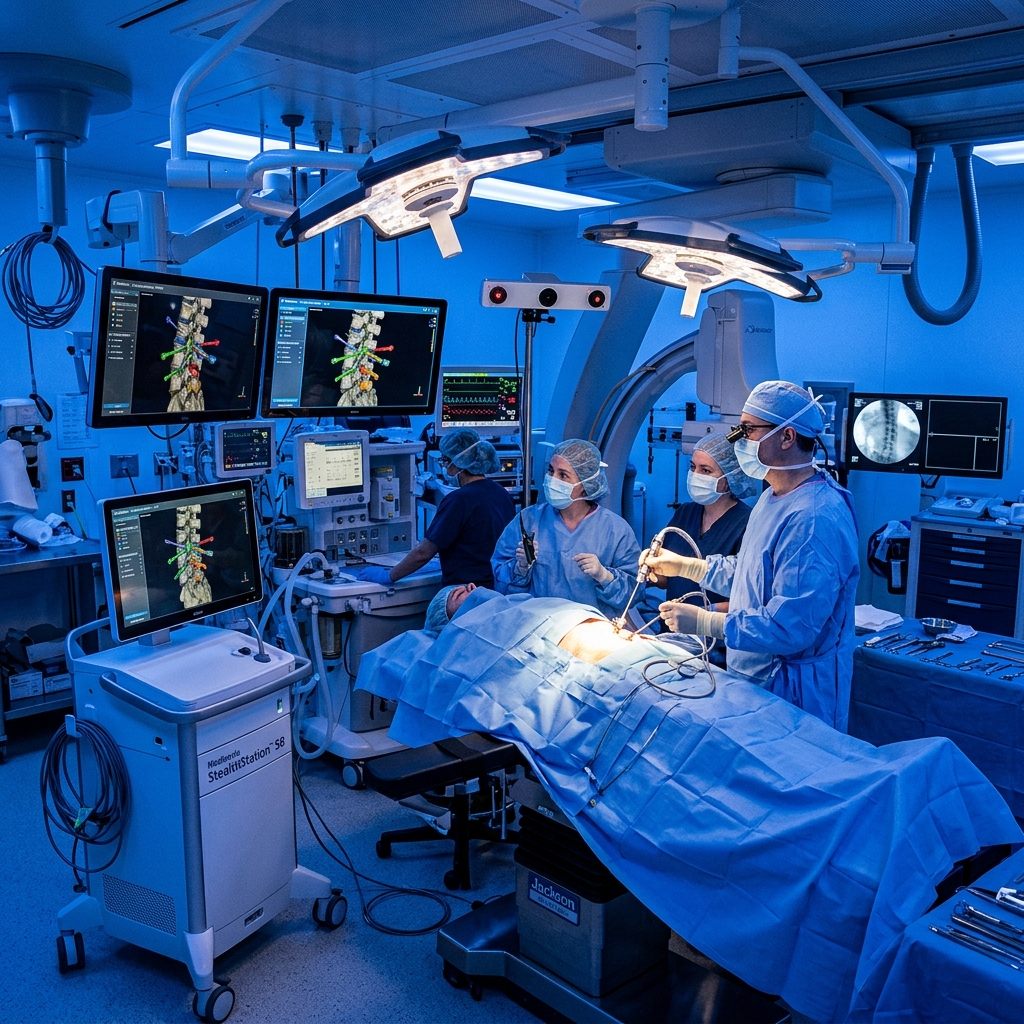
Vertebral fractures are broadly classified as stable (no neurological compromise, structural integrity preserved) or unstable (ligamentous disruption, neurological risk). Osteoporotic compression fractures — the most prevalent type — affect over 1.4 million people worldwide annually. High-energy fractures from road accidents or falls from height carry significant risk of spinal cord injury. Treatment ranges from conservative management and bracing to minimally invasive cement augmentation (vertebroplasty/kyphoplasty) or open surgical stabilisation with instrumented fusion. Dr. Sparsh Jaiswal applies precise neurological assessment and modern classification systems to select the optimal treatment for each fracture.
infoCommon Causes
- Osteoporosis causing vertebral body insufficiency fractures
- High-velocity trauma — road traffic accidents, falls from height
- Pathological fractures through tumour-involved bone
- Repetitive stress in athletes (pars fractures)
- Elderly falls causing thoracolumbar burst fractures
symptomsKey Symptoms
- check_circleAcute onset severe back or neck pain after trauma
- check_circlePain worsening with movement or weight-bearing
- check_circleTenderness and focal swelling over the injured level
- check_circleHeight loss and progressive kyphosis in osteoporotic fractures
- check_circleLimb weakness, sensory disturbance, or bladder dysfunction if cord compromised
Diagnosis
Plain X-rays identify gross deformity. CT scan characterises fracture morphology and fragment displacement. MRI assesses ligamentous integrity, cord signal, and adjacent disc injury. DEXA scan evaluates bone density in suspected osteoporosis.
verified_userMedically reviewed: May 2026 — Dr. Sparsh Jaiswal, MBBS DNB FISS FINM MNAMS · Apollo Hospitals, Indore (Reg: MP-16286 | MCI-19-30548)
Frequently Asked Questions about Fractures
What is the most common cause of spinal fractures in India?
Road traffic accidents and falls from height are the leading causes of traumatic spinal fractures. Osteoporotic compression fractures — caused by brittle bones that collapse under normal loads — are the most prevalent overall, affecting predominantly postmenopausal women and elderly men. Spinal fractures from cancer (pathological fractures) are less common but equally important to identify.
When does a spinal fracture require surgery?
Surgery is indicated when a fracture is unstable (risk of further displacement or cord injury), when neurological deficits are present (weakness, numbness, bladder dysfunction), or when fracture deformity is severe (kyphosis >20°). Stable osteoporotic compression fractures without neurological involvement are managed with bracing and bone-strengthening medication; if pain persists, vertebroplasty or kyphoplasty can provide rapid relief.
What is vertebroplasty and how quickly does it work?
Vertebroplasty is a minimally invasive procedure in which bone cement (PMMA) is injected into a collapsed vertebral body under fluoroscopic guidance — stabilising the fracture and restoring partial height. Most patients experience significant pain relief within 24–48 hours. The procedure is performed under sedation, takes 30–45 minutes, and does not require general anaesthesia. Kyphoplasty additionally uses a balloon to restore vertebral height before cementing.
How is a spinal fracture with spinal cord injury treated?
Fracture-dislocations causing spinal cord injury require emergency surgical stabilisation within 24 hours when neurological function is deteriorating. Surgery decompresses the spinal cord, realigns the spine, and fixes it with titanium rods and screws — creating a stable construct for rehabilitation. Dr. Sparsh Jaiswal performs percutaneous posterior fixation to achieve stabilisation through minimal incisions, reducing blood loss and infection risk.
Get expert advice from Dr. Sparsh
Book a consultation to receive an accurate diagnosis and a personalised treatment plan.