Spinal Condition
Sciatica Treatment
Sciatic Nerve Pain & Radiculopathy
Sciatica describes pain radiating along the sciatic nerve — from the lower back through the hips, buttocks, and down the leg — affecting up to 40% of people during their lifetime.
Seek emergency care if you experience sudden severe back pain combined with loss of bladder or bowel control — this may indicate cauda equina syndrome, a surgical emergency.
Understanding Sciatica
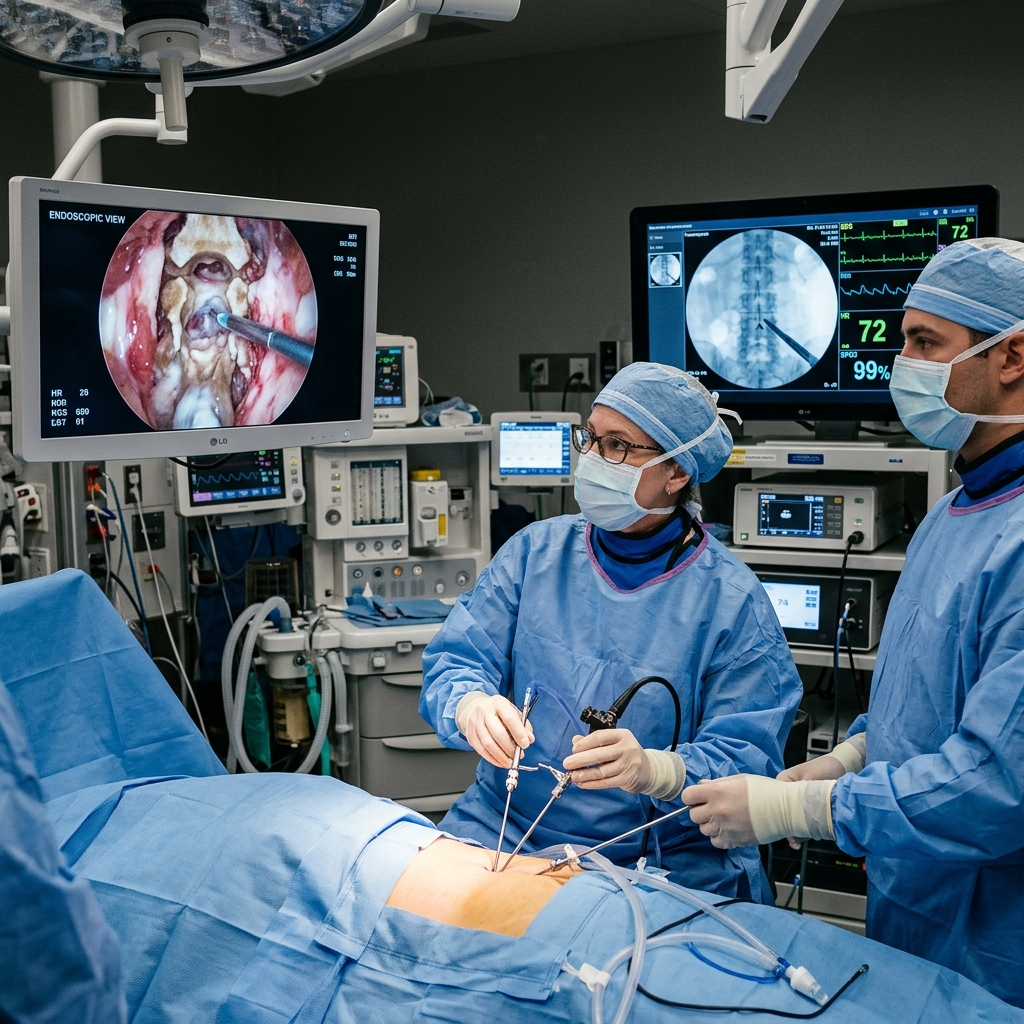
The sciatic nerve is the longest and widest nerve in the body. When compressed or irritated — most commonly by a herniated lumbar disc, bone spur, or piriformis muscle spasm — it produces the characteristic searing or shooting pain known as sciatica. True sciatica affects only one side of the body and can range from mild to debilitating. Dr. Sparsh Jaiswal employs targeted interventions including precision injections and endoscopic decompression to relieve sciatic pressure with minimal recovery time.
infoCommon Causes
- Herniated (slipped) lumbar disc pressing on a nerve root
- Lumbar spinal stenosis narrowing the nerve exit canal
- Spondylolisthesis — a slipped vertebra impinging the nerve
- Piriformis syndrome — muscle spasm irritating the sciatic nerve
- Degenerative disc disease at L4–L5 or L5–S1
- Tumours or cysts within the spinal canal
- Pregnancy-related pelvic changes
symptomsKey Symptoms
- check_circleShooting pain from the lower back down through the leg
- check_circleBurning or searing sensation along the nerve pathway
- check_circleNumbness or tingling in the leg, foot, or toes
- check_circleWeakness in the affected leg making walking difficult
- check_circlePain worsening with prolonged sitting, coughing, or sneezing
Diagnosis
Straight-leg-raise test and neurological examination confirm nerve involvement. MRI precisely identifies disc herniation or stenosis. EMG confirms the level and severity of nerve root compression.
verified_userMedically reviewed: May 2026 — Dr. Sparsh Jaiswal, MBBS DNB FISS FINM MNAMS · Apollo Hospitals, Indore (Reg: MP-16286 | MCI-19-30548)
Frequently Asked Questions about Sciatica
What does sciatica pain feel like?
Sciatica produces a characteristic shooting, burning, or searing pain that travels from the lower back through the buttock and down the back of one leg — sometimes reaching the foot and toes. Many patients describe it as an electric shock sensation. Numbness or tingling in the leg or foot is also common.
How is sciatica different from general back pain?
General back pain is localised to the lumbar region. Sciatica specifically follows the path of the sciatic nerve — down one leg. It is caused by compression of a nerve root, most commonly by a herniated disc at L4–L5 or L5–S1. The radiating leg component distinguishes it from mechanical back pain.
Will sciatica go away on its own?
Mild-to-moderate sciatica from a herniated disc often improves within 4–12 weeks with appropriate conservative management — rest, NSAIDs, and physiotherapy. However, if pain is severe, persistent beyond 6–8 weeks, or associated with progressive leg weakness, specialist evaluation is required. Untreated nerve compression can lead to permanent nerve damage.
What is the fastest treatment for sciatica relief?
A fluoroscopy-guided selective nerve root block (SNRB) or epidural steroid injection delivers anti-inflammatory medication directly to the compressed nerve root — typically providing significant pain relief within 48–72 hours. For patients with confirmed disc herniation causing persistent sciatica, endoscopic discectomy through a 7 mm incision can resolve the nerve compression with return to walking within 2–4 hours.
Get expert advice from Dr. Sparsh
Book a consultation to receive an accurate diagnosis and a personalised treatment plan.