Spinal Condition
Spinal Deformity Treatment
Scoliosis, Kyphosis & Adult Deformity
Spinal deformities — abnormal curves or rotational malalignment of the spine — range from mild cosmetic concerns to severe conditions causing pain, breathing difficulties, and neurological impairment.
Understanding Deformities
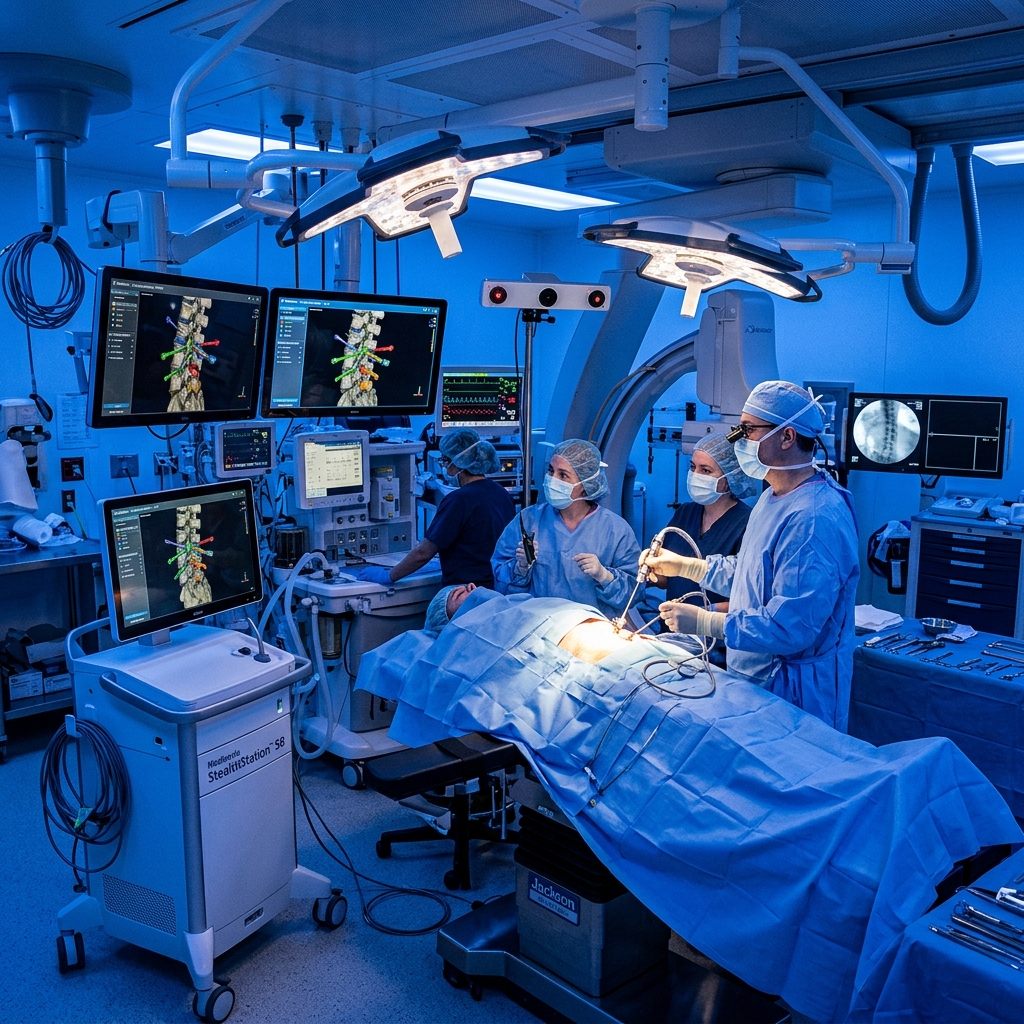
Scoliosis (lateral curvature > 10°), kyphosis (excessive forward rounding), and lordosis (excessive inward curvature) are the principal spinal deformities. Idiopathic adolescent scoliosis is the most common form. Adult degenerative deformity arises from asymmetric disc and facet degeneration. Severe deformity can compromise lung capacity, produce chronic pain, and impair gait. Treatment strategy is guided by curve magnitude, patient age, rate of progression, and symptom burden. Dr. Sparsh Jaiswal offers both bracing programmes and surgical correction — including minimally invasive correction techniques — customised to each patient's deformity profile.
infoCommon Causes
- Idiopathic scoliosis — unknown cause, most common in adolescents
- Congenital vertebral segmentation anomalies
- Neuromuscular conditions — cerebral palsy, muscular dystrophy
- Adult degenerative changes causing asymmetric collapse
- Post-surgical flatback deformity
- Osteoporotic vertebral compression fractures causing kyphosis
symptomsKey Symptoms
- check_circleUneven shoulder or hip height visible on standing
- check_circleProminent rib hump when bending forward
- check_circleBack pain — especially in adult degenerative deformity
- check_circleLeg pain and neurogenic claudication from associated stenosis
- check_circleDifficulty standing straight or maintaining balance
- check_circleReduced lung capacity and breathlessness in severe curves
Diagnosis
Full-length standing scoliosis X-rays measure Cobb angle and determine curve pattern. MRI assesses neural structures. CT provides 3D bony anatomy for preoperative planning.
verified_userMedically reviewed: May 2026 — Dr. Sparsh Jaiswal, MBBS DNB FISS FINM MNAMS · Apollo Hospitals, Indore (Reg: MP-16286 | MCI-19-30548)
Frequently Asked Questions about Deformities
At what degree of scoliosis is treatment required?
A Cobb angle below 20° in a growing adolescent is observed with repeat X-rays every 6 months. Curves of 20–40° with documented progression during growth require bracing — a well-fitted brace worn 18–20 hours per day can halt progression in 72% of cases. Surgical correction is recommended for curves above 45–50° in adolescents or curves causing pain and functional limitation in adults, regardless of angle.
Can scoliosis be corrected without surgery in adults?
In adults, surgical correction restores the spinal alignment permanently. Non-surgical management — physiotherapy, Schroth method exercises, and spinal injections — can reduce pain and improve function but does not correct the structural curve. Adults with mild-to-moderate curves who are primarily symptomatic (pain, not deformity) often respond well to a structured non-surgical programme.
Is scoliosis surgery safe for teenagers?
Spinal fusion for adolescent idiopathic scoliosis is one of the most studied paediatric surgical procedures. In experienced hands, major complication rates are below 2%. Neurological injury is rare (<0.5%) when intraoperative neural monitoring (IONM) is used. Patients typically return to school in 3–4 weeks and resume non-contact sports in 6–12 months. The fused segment is permanently stable.
What causes kyphosis (forward rounding of the spine)?
The most common causes of kyphosis in adults are osteoporotic vertebral compression fractures (causing progressive forward rounding), Scheuermann's disease (juvenile kyphosis from abnormal vertebral growth), and post-surgical flatback deformity. In adolescents, poor posture can cause a flexible (postural) kyphosis that responds to physiotherapy; structural kyphosis requires more aggressive treatment.
Get expert advice from Dr. Sparsh
Book a consultation to receive an accurate diagnosis and a personalised treatment plan.